
Shortlisting
How to shortlist candidates at volume without losing signal
High-volume hiring needs shared stages, comparable scores, and a review queue for the attempts that do not fit a cut-off. Rank is not a shortlist.

“Hiring at scale” is often treated as a sourcing problem. The harder problem is selection: too many plausible people, not enough interviewer hours, and a spreadsheet that cannot explain why someone dropped out.
Shortlisting at volume is the craft of throwing away the right applications, on purpose, with a record of why.
Signal disappears in three places
- Incomparable tasks. Each campus got a different paper.
- Orphaned scores. The test tool emailed a CSV; the ATS has a resume; nobody joins them.
- Leaderboard theatre. The top 50 are interviewed because they are the top 50, even when the 51st wrote a better design answer.
Volume does not require cruelty. It requires a pipeline where a later reviewer can reconstruct the earlier gate.
Build a shortlist from stages and evidence
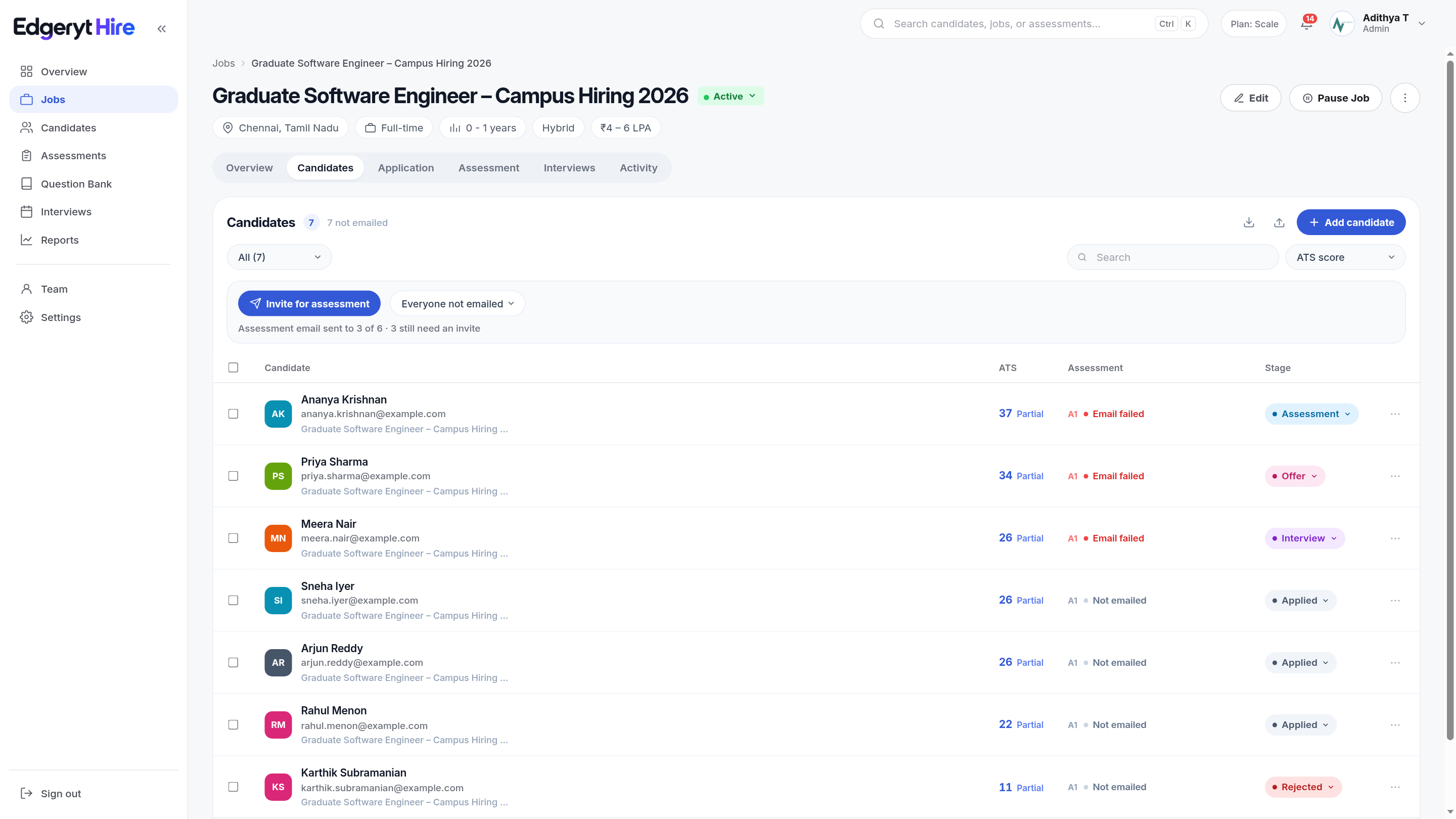
Edgeryt Hire is built for recruitment teams that need applications, assessments, and interviews on one role. For volume:
- One apply page per role, so field names stay stable.
- One assessment version per drive, so scores are comparable.
- Progression rules that a coordinator can apply without a meeting.
- A review step for flags, borderline scores, and written work.
Keep interviewer access role-based. A panelist needs the work sample. They do not need every recruiter comment from screen one.
Practical cut-offs that survive a TPO email
- Publish the expected time and formats before the drive.
- Use section weights you can explain (“coding 60%, aptitude 40%”).
- Set a pass mark and a review band (for example, auto-advance above X, human look between Y and X, stop below Y).
- Cap interviewer load in advance. A shortlist of 400 is not a shortlist.
Related: multi-stage assessments, proctoring review.
Adjacent area: campus vs lateral volume
Campus volume is bursty and similar. Lateral volume is steadier and more varied. Lateral hiring still benefits from the same evidence trail, but knockouts (notice period, compensation band, must-have stack) do more work before the test. Do not copy a campus MCQ as the only gate for senior engineers.
How Edgeryt Hire fits
Hire connects branded applications, skills assessments, proctoring, candidate review, and interview scheduling. Your team follows candidates through one hiring workflow. Scores and integrity flags provide context; recruiters and interviewers make the decision.
There is a free plan to explore the workflow; paid plans add limits and features described on pricing. Enterprise needs are discussed with sales.
Questions teams ask
How do we avoid missing a strong candidate with a weak MCQ?
Keep a review band, include a format that matches the job, and let a recruiter pull someone forward with a note.
Should we show candidates their scores?
Decide before the invite. Surprise score releases create disputes you did not staff.
Can AI pick the shortlist?
Models can help score written work on eligible setups, with human review. Do not treat an automated rank as a hire.